
Face Recognition for Businesses: Benefits and Indonesia's PDP Law
Face data is protected under Indonesia's PDP Law. 7 steps to use it safely.
SENTINEL
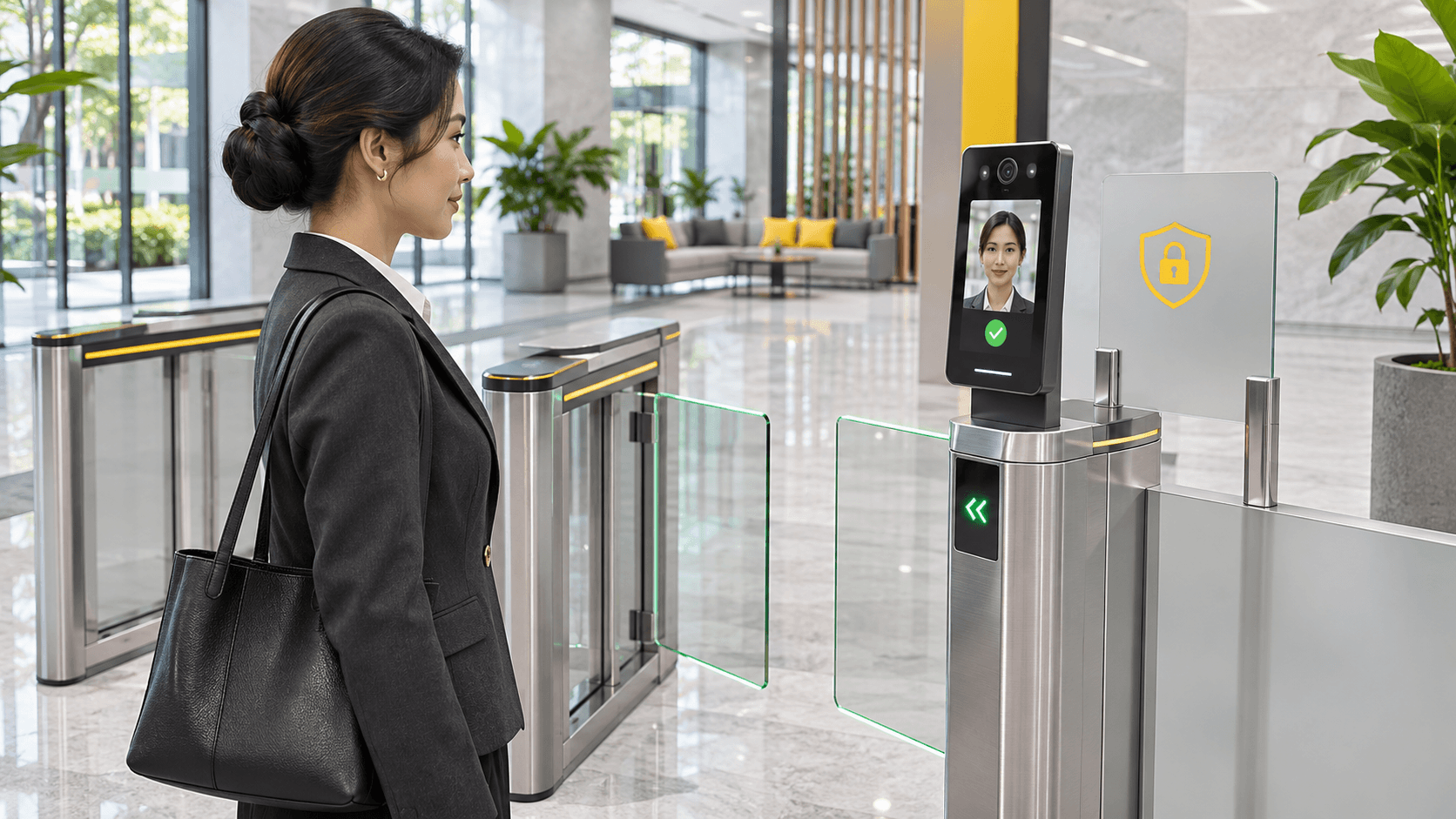
Face recognition is increasingly used by companies in Indonesia, from server room access to finding people in CCTV footage. But a face is not ordinary data. Since Indonesia's Personal Data Protection Law (UU PDP) No. 27 of 2022 came fully into force, companies need to understand the rules before installing a face recognition system.
This article covers how face recognition works, its benefits for businesses, the key points of the PDP Law to keep in mind, and good practice for a safe rollout.
How face recognition works
Face recognition works in three stages:
- Face detection. The system finds faces in the camera image.
- Creating a face pattern. Facial features are converted into a digital pattern that is unique to each person.
- Matching. The pattern is compared against a list of enrolled faces, and the system returns a match or no match with a similarity score.
It is important to distinguish between two things:
- Face detection only knows there is a face, not who the person is. It is used, for example, to count visitors or estimate age ranges anonymously.
- Face recognition knows who the person is by matching the face against a specific list.
This difference determines how strict the rules are.
Benefits of face recognition for businesses
- Access to restricted areas. Server rooms, high-value warehouses, or laboratories can only be entered by enrolled people. Unlike an access card, a face cannot be lent to someone else.
- Verifying employees and contractors. At factory or project gates, the system helps ensure only enrolled people come in.
- Faster investigations. After an incident, authorised staff can search for a specific person across many cameras at once, without hours of playback.
- Anonymous visitor analytics. For retail or public buildings, face detection can provide visitor numbers and estimated profiles without identifying anyone.
What does the PDP Law say about facial data?
The key points are:
- Biometric data is specific personal data. Facial data used to recognise a person is biometric data, which the PDP Law places in the category of specific personal data requiring greater protection.
- A lawful basis is required. The PDP Law sets out several bases for processing, including consent, performance of a contract, legal obligation, and legitimate interest. Companies need to choose and document the basis they rely on.
- Impact assessment for high-risk processing. Processing specific personal data is among the activities that require a data protection impact assessment before it starts.
- Special rules for CCTV in public places. Visual data processing devices in public places or public service facilities may only be installed for certain purposes, such as security, disaster prevention, or traffic management. The area must display a notice, and the device must not be used to identify a person, except for crime prevention and law enforcement.
- Sanctions. Violations can lead to administrative sanctions ranging from a written warning to fines of up to 2% of annual revenue, alongside criminal penalties for certain offences.
In short, face recognition is best suited to a company's internal areas with a clear purpose. For areas open to the public, analytics that do not identify people are the safer choice.
Recommended approach by area
| Area | Recommended approach |
|---|---|
| Server rooms and restricted areas | Face recognition for enrolled people, with notice and a clear lawful basis |
| Employee and contractor gates | Face verification for enrolled people, set out in company policy |
| Lobbies, stores, or public areas | Anonymous face detection, people counting, and heatmaps without identification |
| Post-incident investigations | Limited searches by authorised staff, with every access logged |
Good practice for rolling out face recognition
- Define a specific purpose. For example, "restrict access to the server room", not just "improve security".
- Limit areas and enrolled people. Enrol only the people who genuinely need to be recognised, such as employees for specific areas.
- Give clear notice. Put up signs and include the use of face recognition in your privacy policy or company regulations.
- Limit who can view and search data. Set access rights per user and log every search or footage export.
- Set a retention period. Delete facial data and footage once they are no longer needed for their original purpose.
- Store data on secure servers. Installing the system on your own servers (on-premise) keeps facial data on your internal network.
- Carry out an impact assessment. Document the risks and safeguards before the system goes live.
Supporting features in Axxon One
An AI video analytics Indonesia platform such as Axxon One offers options to suit each area:
- Face Recognition & Search: recognises enrolled faces and searches for a person's appearances in footage.
- Face Detection with Age & Gender Estimation: anonymous estimates of visitor age and gender.
- People Counting and Heatmap: visitor data without recognising identities.
Axxon One can also be installed on-premise, with access rights set per user.
Frequently asked questions
Can face recognition be used in a store or shopping mall? Areas open to the public have specific limits under the PDP Law, including a ban on using visual data processing devices to identify people outside crime prevention and law enforcement. For business needs in public areas, anonymous analytics such as people counting and heatmaps are more appropriate.
Is employee consent required? Consent is one lawful basis, but not the only one. The right basis depends on the purpose and the relationship with employees. Document the basis you use and consult your company's legal adviser.
How long can facial data be kept? Data should be kept only for as long as its purpose requires, then deleted. Set a written retention period and configure the system to delete data automatically.
Want to understand the underlying technology? Read What Is AI Video Analytics? A Guide for Companies in Indonesia.
Note: this article is general information and not legal advice. For implementation in your company, consult a legal adviser.
Implement face recognition the right way with SENTINEL
SENTINEL (PT Sentra Teknologi Inteligen) is the sole distributor of AxxonSoft in Indonesia. Our team helps you choose the right features for each area, design on-premise servers, set up access rights, and train your team. Instalment payment schemes are also available through our multifinance partners.
Book a free consultation to design a face recognition system that is safe and fits your needs.