
Perimeter Intrusion Detection for Factories and Warehouses
Sensors, access control, and video analytics to secure fences and warehouses.
SENTINEL
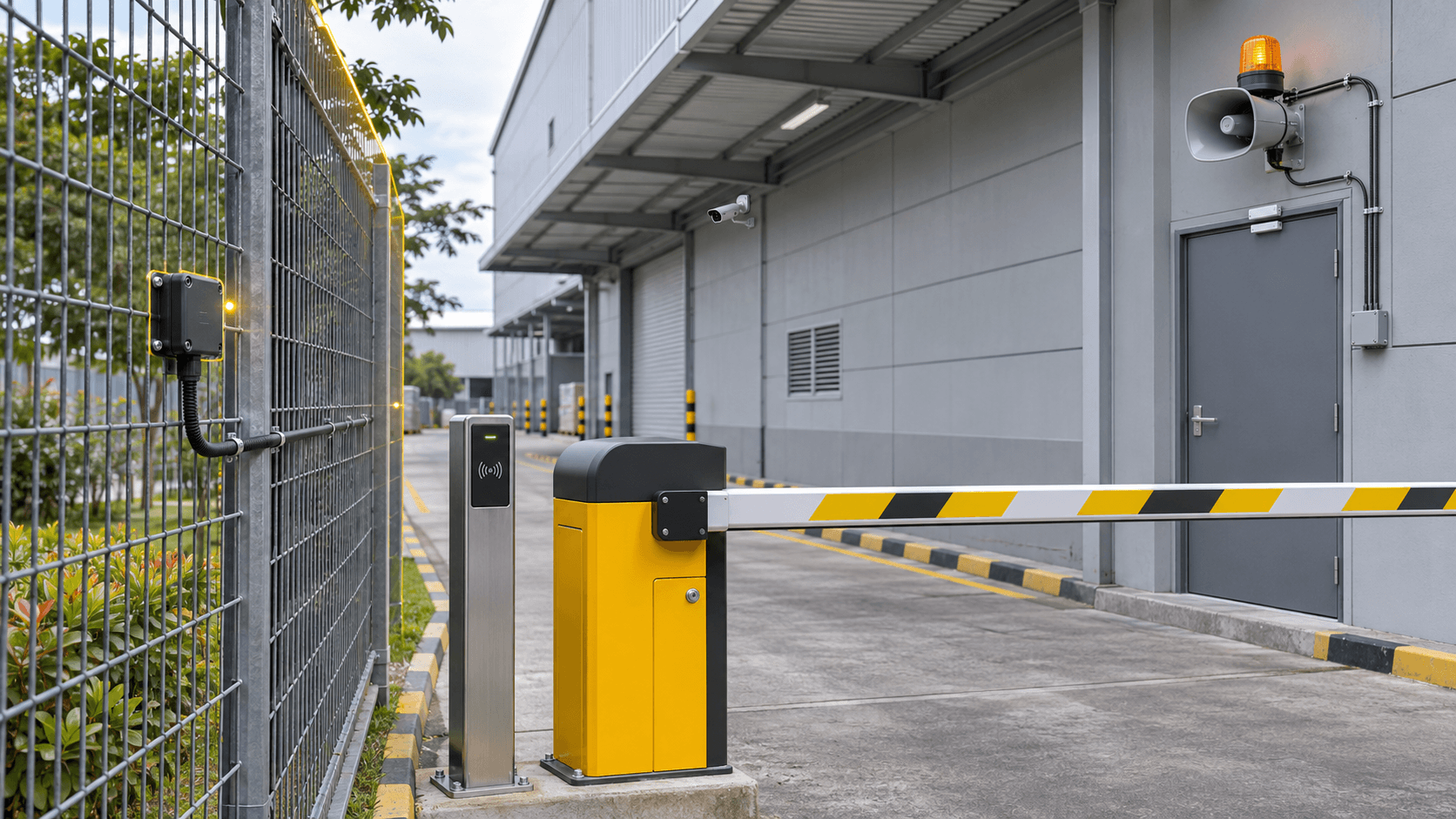
In July 2026, a company warehouse in an industrial estate in Cikarang was broken into by an intruder who came in through a drainage channel and tore through the corrugated metal wall at the back of the building. The loss was only noticed during a stock check. The same week, also in Cikarang, two thieves entered a generator room through the engine cooling vent and cut cables, with an initial loss estimate of around Rp143 million.
Both incidents share the same pattern: the intruders did not use the main gate. They chose the back of the site, drainage channels, or gaps that patrols rarely pass, and they struck at night.
Why fences and patrols are not enough
Fences, barbed wire, and security guards remain important. But some limits are hard to avoid:
- Large areas. Factories and warehouses have perimeters of hundreds of metres to several kilometres, while patrols only pass certain points at certain times.
- No warning. Fences and doors do not tell anyone when they are breached, so incidents are only discovered after goods go missing.
- Systems that work in isolation. Alarms, door access, and cameras often have their own screens, making it hard for guards to see the full picture.
- Blind spots. Drainage channels, roofs, back walls, and utility rooms are often outside regular patrol routes.
What is needed is a layered security system that alerts the moment someone approaches or crosses the boundary, then helps guards verify and respond quickly.
Layers of perimeter security
A strong perimeter does not rely on a single device. Each layer has a different role:
| Layer | Devices | Purpose |
|---|---|---|
| Fence detection | Fence vibration sensors, infrared beams, radar | Signal when a fence is climbed, cut, or crossed |
| Doors and critical rooms | Door contacts, access control with card readers or face readers | Record who enters and raise an alarm when a door is forced |
| Gates | Barrier gates, License Plate Recognition | Control which vehicles may enter and leave |
| On-site response | Floodlights, sirens, loudspeakers | Deter intruders before they go further |
| Visual verification | Cameras with Perimeter Intrusion Detection analytics | Confirm an alarm really comes from a person or vehicle |
How an integrated system works
AI video analytics Indonesia technology acts as the verification layer that ties these devices together.
- A sensor or virtual zone detects a breach. A fence sensor triggers, the generator room door opens outside working hours, or someone crosses a virtual line along the back fence.
- AI sorts the alarms. Analytics distinguish people and vehicles from foliage, animals, glare, or rain, reducing false alarms.
- One screen for every event. With Axxon One, alarms from sensors and access control appear together with video of the location.
- Automatic response. An alarm can switch on floodlights, sound a siren, or play a voice warning while guards head to the location.
Points worth securing
| High-risk point | Suitable devices |
|---|---|
| Back fences and walls | Fence vibration sensors or infrared beams, plus camera verification |
| Drainage channels and culverts | Grilles, motion sensors, and detection zones |
| Generator rooms, electrical panels, and substations | Access control, door contacts, and alarms |
| Outdoor storage areas | Detection zones and automatic floodlights |
| Side gates and emergency doors | Door contacts and alarms when opened outside schedule |
| Roofs and metal-sheet walls | Vibration sensors and detection zones outside |
Reducing false alarms
- Cross-verification. Treat an alarm as high priority when both a sensor and video analytics detect it.
- Object filters. Enable detection only for people and vehicles.
- Active schedules. For example, only outside operating hours or at night.
- Regular review. Check alarms during the first week, then adjust sensor sensitivity and zones.
More complete security from one platform
| Need | Relevant solution |
|---|---|
| Restricted area access with face readers | Face Recognition & Search |
| Smoke and fire in warehouses | Fire & Smoke Detection |
| Monitoring many sites from one control room | Axxon One |
How to get started
- Map the perimeter. Mark possible entry points, including drainage channels and utility rooms.
- List existing devices. Note the sensors, alarms, access control, and cameras already installed, and the areas not yet covered.
- Start with a pilot. Enable detection at the 3–5 riskiest points for a few weeks.
- Set a response flow. Decide who receives alarms, who verifies, and who goes to the location.
- Expand step by step. Add more points and devices once results are proven.
Frequently asked questions
Can we use the security devices we already have? Usually yes. Installed sensors, alarms, access control, and cameras can be integrated into one platform. Additional hardware needs can be supported together with partners.
Will wild animals or leaves trigger alarms? Analytics distinguish people and vehicles from animals or leaves. Cross-verification between sensors and video also helps keep false alarms low.
Does it need internet? Not necessarily. The system can run on a local server on site, so it keeps working even if the internet connection drops.
Protect your perimeter with SENTINEL
SENTINEL (PT Sentra Teknologi Inteligen) is the sole distributor of AxxonSoft in Indonesia. Our team helps you map high-risk points, design layered security, integrate sensors, access control, and cameras into one platform, and train your operators. Instalment payment schemes are also available through our multifinance partners.
Book a free consultation to design perimeter protection for your factory or warehouse.
News sources (Indonesian): RCTI+/Okezone, 15 July 2026 · RCTI+/iNews, 12 July 2026